Philosophical and Practical Precepts
The following is a basis to a paper written by James Middleton for presentation at international conferences. Compiled from the lectures of Professor Wong Lun (OAM), Director of the Academy of Traditional Chinese Medicine Australia. The paper seeks to present a basic over-view of philosophical and practical precepts, also to illuminate the actuality of an ongoing and dynamic ancient tradition of medicine.
A statement from the Chinese medical classic, Huang Di Nei Jing
A healthy life depends on a harmonious and balanced interaction between Xing, physical and Shen, spirit. When a person becomes sick – in whatever context - it represents a breakdown of this relationship; either physical, Xing or Spirit, Shen is leading the cause.
The advanced physician can define the cause of sickness; is the cause from a break down of physical health, or from matters relating to the mental/emotional aspects of Spirit, or are both responsible for the breakdown of health; in TCM practice, this sets the foundation for the diagnosis and the treatment that follows.
Professor Wong Lun has practiced and researched the classical writings of TCM for over sixty years.
“I travelled the world for three years from 1969 to 1972. The purpose was to continue my research on the persona of old cultures and to understand more about the history of ancient medicines. I wrote numerous articles and a book on these subjects. Included within this book were descriptions of the origins of the ancient medicines of Egypt, Persia, Babylon, the Greeks and hypocrites, as well as the origins of surgical operations. In China I found an old book of Anatomy with hand drawn diagrams. In one isolated place I saw a woman who had come into our camp, she was eight feet tall. Her young son was with her; he was already six feet tall. I tried to talk to her about her people, but she ran away. I found so many interesting facts about ancient human beings and the cultures that existed before the age of writing. People change and adapt according to where and how they live, their physical size will vary, diet and temperament will also vary. Some will have a long life and some only a short life, all according to the endless combinations of physical and emotional environments”.
I would like to explain something about the heritage of TCM and what it is I think China has to share with the modern world. Even though I am now at a high age, I still keep my health and continue to help and teach people. I came to Australia in 1973 with the hope of sharing my culture. I opened a TCM college and research clinic in Melbourne, the continuation of the work I began in Hong Kong in 1958. Since that time and before, I have sought to explain to TCM practitioners about the practicality of combining the five arts of TCM into an integrated medical treatment i.e. Wu Da Liao Fa. And to help all people learn about the importance of the balance between the physical, Xing and spirit, Shen, i.e. Xing Shen He Yi.
The purpose of this study is for the relief of suffering, and to present time tested precepts to fulfil the quest for long, healthy and happy lives. The effort towards the attainment of long healthy robust lives is not new. I would like to remind people of a conversation that took place in the earliest days of writing.
Chinese Emperor Huang-Di (the Yellow Emperor) questions Daoist medical master Qi Bo
The following conversation paraphrases a famous excerpt from Chinese historical literature. The Yellow Emperor Huang Di, questions Daoist master Qi Bo, in matters concerning medicine, natural health and longevity, thus forming the body of work immortalised within Huang Di Nei Jing, the great classic of TCM internal medicine that has pervaded the art of medicine in China for thousands of years.
Compiled 2,300-2,800 years ago.
Emperor Huang-Di says to Qi Bo; "I have heard that in the time of our ancestors common life expectancy was one hundred years. Now, in our own time, people reach only fifty years of age before starting to run down, what's wrong? Why is our time so different".
Qi Bo replies: The people of the old time clearly understood union with the Dao, the Way of Life. They were able to practise Daoist precepts such as Yin/Yang and Yi Jing theory in order to balance and harmonise their lives to nature’s way. Thus, they formulated practices such as Dao-in Bi, techniques combining stretching, massage and breathing exercises to promote energy flow, and meditation to stabilise the mind and harmonise with the greater universe. They ate a balanced diet at regular times, arose and retired at regular hours and all of this in accord with changing seasons and personal lifestyle. Daily activities were governed to balance work and rest, neither to consistently overwork Xing, form, or Shen, mental/emotional resources. They knew how to balance one with the other (Xing and Shen), never allowing prolonged depletion of either. This is why they were able to live happily for over one hundred years.
Wrong thinking and wrong action is all from ignorance of a correct way. Many people simply suffer from overwork, thereby creating any of the five taxations, without knowing how to recover well enough, before doing it again. Overindulgence, over sex, over work (in which ever form) and a resulting lack of sense of purpose, will cause loss of balance between a person’s Yin and Yang. This is why our people in this time begin to run down at only fifty years of age". Paraphrase of Professor Wong’s lecture 19/5/02
As the above conversation indicates, knowledge regarding natural life and health and longevity has passed to us from the old culture. From a lineage reaching back in time to the ages before writing developed. Further, from ancient concepts regarding the study of nature, (Nature Dao) originated the foundation principles of TCM medical practice. From teachers and medical scholars such as Fu Xi, Guang Cheng Zhi, Yu Huang Da Di, Hong Jun Lao Zi, all of who enunciated principles concerning the lore of nature and how these precepts directly relate to human beings.
In the interest of general education, I would like present a brief overview of a few of these basic concepts. Some of which our Australian people might have heard something about.
Yin/Yang Theory
There are many, many kinds of Dao - great cycle or way of life. The basic meaning of Dao is the way to connect with the pre-existing order and underlying intelligence of natural life. Natural life harmonises and adapts to the constant changing of Yin and Yang. Throughout life, Yin and Yang need to change and rebalance continually, thus maintaining health. The various schools of Dao contain the same kinds of thoughts, but the principles to achieve balance vary considerably. Nature Dao, study of nature, is to constantly identify and follow the natural way of human life – where all aspects are balanced, neither excess (Yang) nor deficiency (Yin) are prolonged, being neither consistently too strong or too weak.
Why study concepts such as Yin/Yang theory? Yin/Yang education facilitates a subliminal and conscious structure for reasoning, evoking logical insight of nature’s way and actions related to a healthy way of life. From this, people in relationships can become balanced; also, the relationship with all matters concerning our world can become more consciously balanced.
What are Yin and Yang, and how is Yin/Yang related to Wu Ji, Tai Ji, Ba Gua and Yi Jing?
Wu Ji means no end – it is everywhere and implies that all in existence is contained within Wu Ji. The term is used to denote the great void or the great ultimate, or that which exists as, and beyond, the physical body.
We may also contract the idea of Wu Ji to define any unknown construct. For example, draw a straight line and write Yin at the beginning and Yang at the end. We now think of this line as a microcosm of Wu Ji. The changing Yin/Yang character from movement between the maximum Yin degree at one polarity, to the maximum Yang degree at the opposite polarity is Tai Ji. Tai Ji defines Yin/Yang changing; it is the movement pre-existing within Wu Ji.
A line does not carry any variation of character from one end to the other, but nature and the universe do. Nature displays hot to cold, wet to dry, light to dark, weak and strong, large and small, masculine and feminine, loud and soft, extroverted and introverted, icecaps and the equator, hostile and passive, happy and sad, black to white, fearful and brave, internal and external, earth and heaven, quantum and particle. These name a few of the vast array of opposite polarities that exist in Yin/Yang relationship to each other. Here we name the opposite extremes, but existing between polarities are degrees in between. If we write hot, representing Yang at one end of this line and cold, representing Yin at the other end, then this defines the Wu Ji of this relationship. The half waypoint represents a half Yin and half Yang character, which indicate neither hot or cold.
Yin and Yang declare the two polarity forces of Wu Ji. The ancients further divided Wu Ji, from two into four, from four to eight, and from eight to 64. Formal delineations of Wu Ji occur when increasing the number of lines of Yin and Yang. Doubling the two images and the two lines of Yin/Yang creates the four images termed Si Xiang. Si Xiang means four corners. Yin/Yang changing within Wu Ji now separates into four basic forces. Each force displays an individual Yin/Yang characteristic.
We double the images and the lines of Si Xiang, four corners,to form the eight-sided Ba Gua. Si Xiang has particular application in medical study. Ba Gua has particular application to the study of planet earth’s eight fundamental attributes and directional influences.
Within the movement of Tai Ji and along Wu Ji from Yang to Yin, it is further divided into 64 individual forces, each with its own interpretation. This occurs when the Ba Gua lines are multiplied in the same way. These segments form the images that make up the 64 hexagrams of Yi Jing, (known in the west as I Ching).
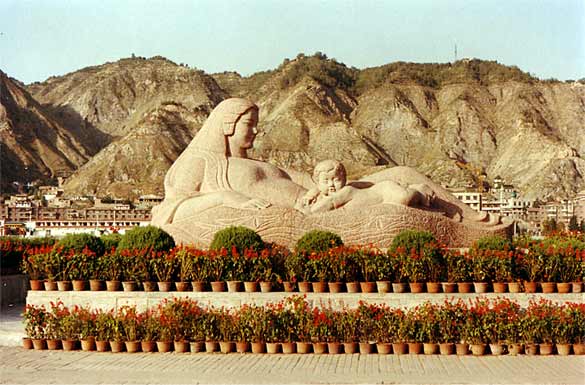
Photo: The city of Lanzhou is bisected by the mighty Yellow river, said by all to be the giver of life. A woman and her baby resides on the bank as a symbol of the life giving nectar offered by the river, in this otherwise dry harsh clay soil environment.
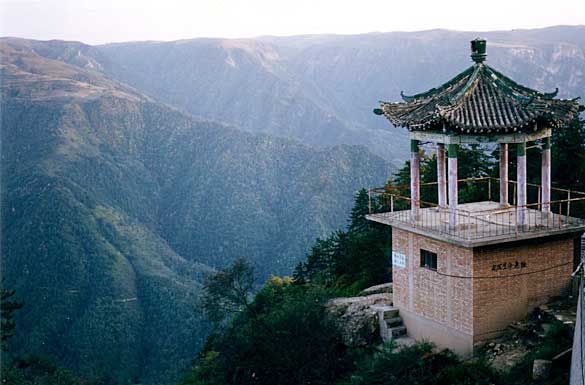
Photo: The junction of the vast mountain range of Kong Tong that overlooks the homeland of The Yellow Emperor Huang Di. This place is an ancient site of the oldest known Nature Daoist settlement (a very difficult climb) and is said to be where Zhang San Feng resided. He is credited as being father of Daoist Tai Chi Quan.
Through the vehicle of Yin and Yang, Tai Ji, Si Xiang, Ba Gua and Yi Jing, we deduce the flow between and define the fundamental character/influence of any position between Yin and Yang. Any life, medical condition, emotional, psychological, geological, or atmospheric situation within the universe can be classified by Yin/Yang and when more experienced, further delineated to form Yi Jing. From this kind of education/awareness, we become more able to deduce the Yin/Yang influences upon us and logically define where we stand within Wu Ji at any time, place or situation. The important purpose of this work is first to recognise, and then to balance excessive Yang with a Yin influence or vice versa.
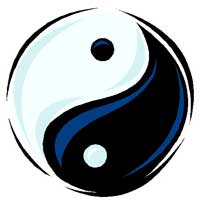
Yin Yang Symbol, also known as Tai Chi Symbol
Xing Shen Yi Xue
Physical and spirit balance each other, unity of form and Spirit. The whole person separates into these two fundamental aspects, which must combine together for health and long life. If they do not combine appropriately, a person will become sick. This principle has roots reaching back 16,000 years, there are indications that knowledge of this principal goes back even before this.
Xing (physical) Shen (spirit) medicine embraces the understanding that psychosomatic and psychological illness is not a separate stream of theory from mainstream TCM therapy. Ancient China’s understanding of the relationship between body and spirit is very clear, offering practical explanations for the way diseases occur and further, how vital it is to understand fully the way psychological state affects the physical body, and how the physical body affects the psychological state.
Concept of Xing-Shen Medicine
Xing represents the physical - physique, or body. Shen, the subtle body, consisting of all the mental activity of the mind, all emotional feelings, and feelings related to life’s purpose, here for simplicity termed spirit. Regarding the inter-connectedness of body and spirit, references can be found within the earliest medical and philosophical works. For example, the Huang-Di-Nei-Jing expounds this relationship.
It states that; "the body is the home of the spirit. The spirit is the master of the physical”. The spirit attaches itself to the body and the biological and physiological phenomena are the signs of the “Shen” (spirit,) manifesting itself. 1997 Paraphrase -Lanzhou International Conference of TCM, Xing Shen Medicine.
Physiological Basis Of Xing-Shen Medicine
In TCM, great attention is always given to the close relationship between mental and emotional activities and physical health. The theory espouses that unity of Xing and Shen (spirit and body) together make up holistic health. To strengthen the body, one must strengthen the spirit. Further, great emphasis is placed on the essential guiding role played by appropriate regulation of spirit in daily life.
Huang-Di-Nei-Jing further states, in the quest for health and longevity, one can be healthy and free from disease only when a person cultivates physical essence, (the foundation of the bone marrow, each organ is also said to have essence) and uses Qi, vital energy, wisely, and takes care to nurture the mental/emotional state of spirit. Thus can people be full of vigour with every physical organ and associated system remaining vibrant, henceforth, able to function properly over a long natural life span.
On the other hand, an imbalance within a person’s spirit may result in a variety of diseases. As again stated in the Huang-Di-Nei-Jing, it is known that all diseases arise from a disorder of Qi (reckless movement, stagnation or blockage of the internal energy dynamic). Anger/stress forces the Qi to rise, excessive sadness or excitation brings the Qi down, terror/fear confuses the flow of Qi, grief depletes the Qi, and anxiety causes the Qi to stagnate.
Anger/stress harms the liver, excessive excitation or sadness harms the heart, anxiety harms the spleen, grief harms the lung, and fear/fright harms the kidney. In brief, loss of harmony-balance within Shen (subtle body) causes deleterious movement of the Qi (vital energy) greatly affecting ones Xing (physical) health.
On the other hand, if the physical body is weak due to under development, then the earthly base/root of spirit, being the physical body, cannot provide a strong foundation for the life pursuits of a wholesome spirit. It is often the case that problems occur because the physical body is too weak, or too easily exhausted via misuse or poor diligence. Many people in our society have this as their main problem.
Applying Principals Of Xing-Shen Medicine For Prevention Of Diseases
TCM suggests that the prevention of disease is more important than the treatment of disease. According to Xing/Shen medicine, the following principals are vital for the prevention of disease.
- Adjusting mental emotional activities to nourish the heart and promote tranquillity.
- Living life with a sense of regularity, setting a proper balance between work and rest.
- Participating in physical activities, taking part in appropriate physical cultivation according to age and temperament.
- Adopting self-massage techniques, breathing exercises and Qi building exercises for health care.
- Careful attention regarding diet.
Tian Ren He Di, Unity of Heaven, Life, People and Earth
Tian is heaven, Ren is centre, life (or in-between heaven and earth), Di is earth and He means unity. Here we will see why the ancients separated nature into three distinct categories.
Tian divides heavenly influences into nine categories.
The six basic natures pervading heaven are: Feng – wind, Han – cold, Shi – damp, Zao – dry, Shu – summer heat, Huo – fire. All of these natural phenomena cause disturbance or changes to physical entities i.e. to Yi, earth and Ren, life. They combine together, i.e., wind cold, dry heat, etc., or give effect individually. Tian influences can manifest three basic conditions within Ren, a person: Re, heat, Xu, weakness/vacuity, and Shi, excess/replete. Tian influences assert changes to Ren, life, thereby demanding ongoing adaptation from Xing, form, and Shen, spirit, in order to maintain natural health.
Ren refers to life – all living entities between heaven and earth.
In order to maximise potential for good health and long life, we need to understand how Xing, form, and Shen, spirit, combine to defend against the evil attack (pathological penetration) of Feng – wind, Han – cold, Shi – damp, Zao – dry, Shu – summer heat, or Huo – fire, or they will disturb a person. This study is fully contained within TCM theory.
Di is earth; earth is the ground/centre, for the interplay arena of Wu Xing, the five elements.
Wu Xing, five-element phase theory
The elements are: fire, water, earth, metal and wood. The Wu Xing, five-element phase theory, is structured to enunciate earth’s Yin/Yang changing. This is the cyclical movement/changing between the elements of earth; how they effect, give rise to, balance and support each other. They illuminate all aspects related to earth’s elemental Yin/Yang make up and changing.
In TCM theory, each organ system of the body is associated with an elemental phase according to its fundamental character. That is, the heart is known as The King of Fire – the heart’s vigorous pumping action generates heat (relative to the other organ systems) and is therefore associated with fire (Yang); whole-body fluid regulation by the kidneys is more subdued and associates kidneys with water (Yin); liver – wood; lungs – metal; and spleen – earth. As external nature is obviously mirrored in the make up of the earth of a human body, application of the five-element phase theory defines how the body organ systems coordinate, balance, support and potentially attack each other.
The above Tian, heavenly influences, and Di, earth’s elemental physical building blocks, all cause changing upon the Xing, form, and the body’s condition can effect upon Shen, spirit. Ren, people, are also affected by life circumstances apart from those of heavenly or earthly influences. Conditions of Shen, spirit, can have an effect upon Xing, body (form). These influences may include depressive environmental surrounds, work conditions, emotional and family relationships, social and political environments, etc. Understanding how Xing, form, and Shen, spirit, combine and how the above can disturb a person will provide understanding. The study of TCM includes all of these concepts.
The next step onward from understanding the individual characteristics of the above three divisions, is how to understand the profound overall relationship dynamic between Tian, heaven, Ren, people or living entities between heaven and earth, and Di, earth’s elements, and how they combine/interrelate in totality. The Ba Gua correlation of symbols was created to enunciate this quest.
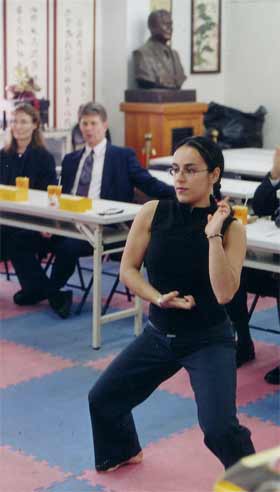
Photos; Julie performing the Wu Gong long form, prior to Professor Wong’s physical arts students receiving Tai Chi and Wu Gong grading certificates, from the Taiwan Martial arts Association. The Taiwan government certifies these awards.
Tai Ji Quan, Wu Gong and Tang Sou.
Knowledge gained from the physical arts. These present the diligent student with insight regarding, Qi (vital energy), Spirit, and physical form and structure. How Qi connects the Spirit to the physical body via the meridian system, how spirit leads Qi and form etc.
Ru-Yi, TCM Medical Literate
Archaeological studies and literary pointers indicate origins of the study of natures lore i.e. nature Dao principles, may reach back as far as 16,000 years. We can, through this vast transmigration of time, today understand concepts such as Yin and Yang and realise why they are always relevant to people, no matter from which age.
For example, regarding the cycle of night and day, Yang time is from sun up to sun down. The sun causing light and heat to increase natural activity by warming the earth, is a typically Yang function. Night is considered Yin time due to the darkness and relative coolness and is naturally more appropriate for recovery, rest and sleep. Regarding people, in relationship to earths daily cycle of night through day, and the best way to govern our own finite personal resources, Yang time is naturally the best for activity and working, Yin time the best time to restore and rest. When rest and work balance each other, longevity will be enhanced and health will not suffer with this as a cause. A person of Ru Yi will understand a vast range of natural principles, like the one above, and how they affect the well being of people.
Shi Liao – diet
Creating logical adjustment of food intake in accordance with the prevailing seasonal influences and personal health condition. The first level of common knowledge in the old time was concerning the use of food as a means to maintain the balance of Yin and Yang. Apart from the maintenance of general health, adjustment of diet is employed in the early stage of any sickness. The first approach was to adjust lifestyle and diet and eat foods that would balance the condition and to cut out foods detrimental to the condition. This approach was more often than not enough to restore health. If this were not enough, only then would the stronger remedies of herbal medicine and acupuncture be employed. As the common people were mostly dependant upon prevention for health, this knowledge became highly refined and a fully integrated part of Chinese culture.
From these, and other foundation principles addressing natural human life and the way of nature and change, we transpose and apply them to medical theory and the treatment of people, always aware that each era creates its own unique problems. The study of elemental change, social, cultural and emotional environments within the framework of ancient and well understood knowledge, will lead the practitioner to a deeper understanding of the patient and to a more effective result.
I have now practiced and researched TCM for over sixty years. Because of what I have learned from my studies and experience, and supported by the classic writings, I have been practicing a holistic method combining the five main therapies into an integrated form of treatment, termed Wu Da Liao Fa. TCM should not be limited to only one or two disciplines. It is best to combine the disciplines, applying the appropriate method to exactly match the patient’s presentation. I have found the combination of methods to be the best way to quickly and effectively help the patient gain a dynamic result.
- If the problem stems from the internal material substance of the body, organs etc. herbs become the main treatment for balancing a person.
- If the problem stems from a meridian, we use the meridian Qi to correct the balance. I.e. acupuncture.
- If the problem stems from a tightening, or twisting of the muscles and tendons at a superficial level, we use massage and the specialised methods of Wu Yi to help.
- If a person’s diet is either too weak (Yin) or too strong (Yang), for example, due to excess of rich foods, wrong food at the wrong time, poor appetite, or if a person is recovering from sickness. We utilise dietary therapy - Shi Liao, as a tool. If the body is run down then a person should not only rely on herbs, an appropriate diet is required to build up or balance the body again.
- If a person’s lifestyle or work practices always require overuse of one side of the body, the body will show one side is overdeveloped and the other side under developed in comparison. Or, if a person has poor postural habits in their lifestyle. We need to offer physical exercise therapy - Ti Liao in order for the appropriate exercise to balance the Qi and blood circulation of the body. This will release the pressure on those parts of the body accepting the daily stress from strained postural equilibrium.
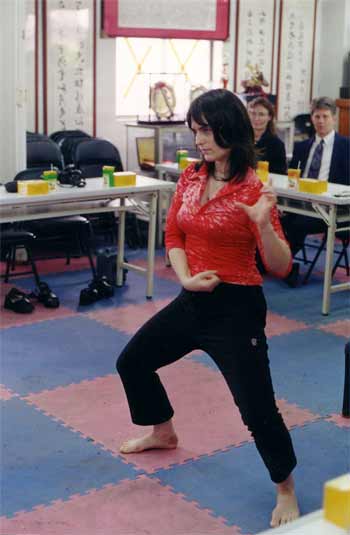
Photo; Wendy's turn
Wu De Hui, Martial Arts Moral Ethics Association
In martial arts training, the strongest arm can win and hurt so many people. I don't like this. Being gifted with a strong arm alone does not make a fine leader or necessarily a fine human being. A person needs to be balanced. When people learn the martial arts they must have De, moral training, to calm them. If they do not, then all they evolve in their character is a tendency for cruelty. Cruelty, misery and destructive rebound behaviours live in the same house; thus is a person destroyed. True masters and the precepts taught within the great martial traditions never allow the martial arts purpose to win/kill to control character. To retain a natural human purity/tranquillity of spirit, and to move toward a sublime inner state, then De, moralintelligence, must control character. When a person has De, self and natural human nature are balanced. The Wu De Hui is the style of martial arts I teach at my school. De, moral intelligence, is included not only in the title Wu De Hui, but is an integral part of the training. In any field, prowess without De, moral virtue, will only lead the practitioner into trouble and deny them the opportunity to develop their natural human nature, which is much more than the fruit that stems from prowess alone.
The basic level of training teaches us to correct bad habits that create postural flaws and internal pressure. Only then can physical activity in all circumstances be performed with maximum efficiency, without disruption of Qi or blood flow throughout the whole body, including organs, or even through a single joint. When this training reaches a higher standard, it is difficult to suffer ills from the effects of normal ageing.
This is part of the culture Professor Wong has offered to the modern generations. The seeds of this training begin with the practice of slow Tai Ji Quan. The slow, precise movement teaches co-ordination of breath with movement. This strengthens the breath and builds Qi (vital energy). Emphasis is upon correct positioning of body for the maximum advantage of natural meridian pathways. Each position will lead the Qi through a particular pathway and when you can feel the Qi, you can learn how to keep internal and external postural integrity in all life circumstances. This is Qi training.
Wu Gong physical art’s training is termed Li - internal energy and Jing - co-ordination training. This comprises the strong martial style exercises. Wu Gong strengthens all parts of the physical structure. Emphasis is to eventually be able to concentrate and organise energy to be focused upon a single point. The initial stages of this style of development, is to understand and strengthen every part of the body, to use and co-ordinate every part, all according to age.
Nature Dao
Nature Dao training is associated with study concerning the Lore of Nature and matters relating to development of a wholesome spirit, (not to be confused with any form of religious practice or worship). The course is open to any person who has completed 3 years of Tai Ji and for TCM students. This is a further step on from Tai Ji and Wu Gong physical arts. The Dao course is high-level training for development of mind, Spirit and physical co ordination. This includes how to quieten and concentrate the mind and develop all aspects related to spirit. It includes the teaching of self-healing techniques and meditation.
The effect upon the body and mind when we train in the above ways is to build up all the individual parts that together make up the whole person. The combined totality of this development is called Dan. Nei Dan is the co ordination of the whole person into a balanced unified whole. Medical practitioners are the instructors of these courses; all emphasis is upon the development and strengthening of holistic health.
Over the years Professor Wong has trained many teachers in these exacting and exciting arts. There is no competitive aspect, young and old perform the training according to age and physical make up. Many patients are directed towards the physical arts for the required need of making them stronger and as a practical aid for prevention. The co ordination of the physical and healing arts is all a part of the original Chinese Medical tradition.
Our aim is not only to treat the prevailing sickness and not worry about the future. Our purpose must be two fold, to treat sickness and to prevent the next oncoming sickness. This is why, over time, everybody must deepen his or her knowledge. People should try to seek a stream of unfolding natural self-cultivation and become skilled enough to recognise and thereby prevent the subtle progressions of disharmony. These people will be able to actively engage in the practice of prevention and finally be able to attain a healthy happy life of at least one hundred years.
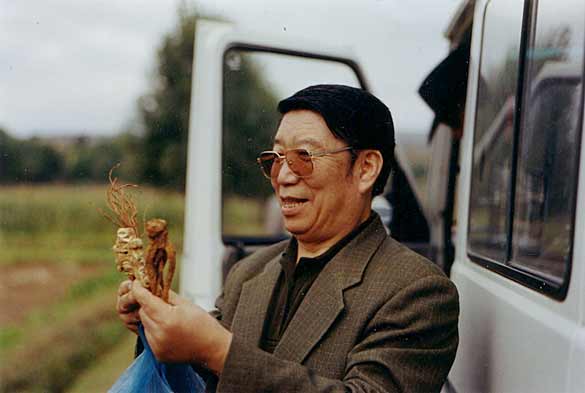
Photo; Professor Shu holding a fine example of the Dang Gui root. A visit to the most famous growing region for this herb, located south of Lanzhou. Academy tour 1997.
PROFESSOR LUN WONG OAM; ACADEMY OF TRADITIONAL CHINESE MEDICINE AUST. FOUNDING PRINCIPAL TCM CLINICIAN AND EDUCATOR
THE ACADEMY PRESENTED; TCM CLINIC, STUDENT CLINIC, ADVANCED DIPLOMA TCM AND WESTERN HEALTH SCIENCES, POST GRADUATE STUDIES - NATURE DAO (STUDY OF NATURE), SCHOOL OF PHYSICAL ARTS; TAI JI, WU GONG, TANG SHOU, JUDO.
Offered below are selected pieces from the 30 Nature Dao Lectures presented to the post graduate students of TCM and invited guests. Professor was asked by the then Chinese Health Minister (a personal friend) to return and share his knowledge of TCM and also to aid the curriculum regarding re introduction of the teachings of Confucius to the Chinese education system - after their banning under a previous regime.
PROFESSOR WONG SPEAKS ON EDUCATION
SUMMARY OF CONFUCIAN PRECEPTS AND PHILOSOPHICAL TEACHINGS
Virtue; Confucius emphasized virtue rather than strength. (Not to be confused with the fundamentalist or puritanical associations of this word.)
Virtue as the root Ben. Wealth as the tips of the branches Mo. Virtue has precedence.
Therefore, the spiritual condition precedes the material condition of a human being. Wealth and power are both less valuable than virtue.
There are two tides of force overwhelming society in the modern world. Both neglect virtue as the root Ben.
1. Materialism/pernicious capitalism/exploitation
2. Power/force
Modern societies stress ways to enrich the material aspects of life. Thus, utility becomes the root and emphasizes technology that gives profit and acquisitive material gain. Virtue as the root is neglected.
De universal moral conscience, universal moral intelligence. What follows is the corresponding behaviour in thought, speech and action, towards self and in relationship with others. At all times and places people displaying moral intelligence can easily keep with the natural laws of society and the universal laws of nature. They display abundant mental and physical energy.
Confucius always deals with moral values.
De the moral lore (virtue) establishes a base for moral values.
Ben root/source/ origin that upholds and nourishes a natural cycle of life Dao Sheng. A natural Dao life has at its foundation, moral intelligence, De.
Mo branches or tips of branches, fruit – medicine, justice, technology, professional disciplines, success in family life and knowledge itself.
Thus, the Confucian statement: virtue is the root wealth is the consequence.
It is essential to understand that the foundations must be in order. If not, then the branches and tips will be disordered and this leads to failure.
De Zhi Ben Yi, Ben Li Er Dao Sheng
Universal moral conscience De, is the root/source Ben, that establishes a natural cycle of life Dao Sheng. People should not abandon this foundation.
Da Xue Doctrine of Confucius, Chapter 3. History has presented thousands of translations of this chapter.
Confucius expresses that all material things have their roots, and heathy roots are essential for the flourishing of life; the tips or branches are non-essential in contrast. Human affairs have origins and endings. The integrity, or not, of the origin/foundation/roots, will be reflected by the ending. When referring to any life cycle; origin Ben, is birth and growing, and according to the quality of birth and growing - the quality of completion, closing and dying Mo. Individual life paths have a beginning, middle and a completion, mirroring variation according to the character/consequences of the life path. (See Lecture 21, Zhi Sou Ben Mo.) To contemplate the priority of what heralds’ primary importance in life, what is secondary (what follows), and what to definitely reject, leads a person to approach the Way of the Dao.
CONFUCIUS TAUGHT THE FOLLOWING
Humility Empty Heart Clear Mind Xu Xin
Xu Xin humility, empty heart - facilitates a clear mind even in the midst of great accomplishment or great tribulation. Only then can a person hear and discriminate well enough to discern new knowledge. What follows is the capacity to adapt and integrate new knowledge.
A timeless question is posed: What is the right thing to do while alive? An inquiry of this kind has many possibilities. Humility, empty heart, clear mind Xu Xin, provides an essential basis for enquiry. Confucius suggests: first, we maintain physical health. Second, to unveil mental/emotional and moral intelligence - to nourish the heart and experience the best of human nature.
Unity of Form and Spirit Xing Shen He Yi
Xing Shen He Yi, unity of form and spirit - is gained when both the body and Spirit are strong. Each reflects and reinforces the other as either or both experience fluctuations. When balanced, supports a composed consciousness. Confucius was clear about the gaining of this elusive goal - a composed consciousness. The initial focus must be to refine to a high degree the relationships of people to people – people in peace together – termed Ren Dao, which has eight steps.
Eight Constant Virtues of De Moral Conscience Ren Dao
The eight constant virtues are life tactics to empower Ren Dao, peaceful people-to-people interaction. These describe practical, social and ethical guiding principles enabling integrity in human relations.
1. Integrity sincerity Zhong
Trustworthy, reliable and sincere in thought, speech and action Zhong. This includes the internal dialogue of self with self, and in the variety of life relationships, and by reciprocity.
2. Filial piety Xiao
Respect and loyalty for teachers, elders and family Xiao. Honouring parents and older people. Caring for people who cannot help themselves.
3. Benevolence fulfilment of human potential Jen
To continue the cultivation of the physical body, Xing, and the mental emotional resources of spirit, Shen. To nourish character with knowledge and good will. Being connected to people.
4. Love fraternal affection Ai
Fraternal affection Ai. Honouring relationships according to degree, parent to child, husband and wife, friend to friend, employer to employee.
5. Faithfulness loyalty Xin
Confidence of and keeping trust with friends and associates. Forming a basis for mutual cooperation and loyalty that leads to giving assistance quietly and spontaneously. If you offer a promise, people have confidence that you mean what you say.
6. Righteousness Yi
Acting naturally and spontaneously Yi. Not motivated solely by reward. Seeing something is wrong and even if not directly concerned, help to correct the situation. Helping others from a sense of compassion and regard for natural justice.
7. Harmony unity He
Harmony within self by steadfastly staying with one’s natural senses He. Remaining calm enough to concentrate well enough to find a way through - other than resorting to anger, upset and fighting. Happiness and longevity come more easily when harmony between people. No matter how angry or how you justify hostility, keep the mind aware of He. Treat the situation as your friend and work out a peace.
8. Balanced behaviours Ping
Balanced behaviour toward all human beings and self Ping. Ping is balance. You are a human being and I am a human being – why should someone think they are superior? If someone is senior or better at something only means that he or she, or you, might have an opportunity to learn or teach, follow or lead. Ping means to keep everything level. Avoid egocentric arguments such as, I am the top, I am the best, who do you think you are, or to push people down. Accept any situation for what it is and work the problem until a solution presents itself. If a solution does not present then let it go and allow time to pass. Ping is to create harmony within self and in relation to people. Ping is to nurture balanced behaviour toward humanity.
Confucius lays a foundation for propriety in daily life, both for the common person and the exalted. Repetitions of these famous eight Ren Dao have been taught in Chinese schools, as plays and songs for the children to sing at assembly or on music days. In this way, elders inform their children in a fashion that allows them to know very clearly about the important life question: what is a right way? Repetition of these eight communications - Ren Dao, teaches competently and completely about how to do the right thing.
Why Did Confucius Write and Teach These Precepts?
The time prior to, and the world Confucius knew was replete with war. He lived during a time of unprecedented political and military turmoil, historically known as the Spring and Autumn Period, 722–481 BC. He observed that the moral condition of people was non-existent; they had no morals at all. Sons killed fathers, brothers killed brothers for power, position and influence. Small countries and states fought each other without reprise. When he lived, this state of affairs had existed for 250 years. It was said of Confucius that he wasn’t born so clever. During his travel’s awareness grew that the way of life he witnessed was so utterly wrong. The world he travelled was barren of moral ethics, full of misery and completely lost to the Dao.
I have added Confucius to these lectures so that people can understand something of Chinese culture and to illustrate a basis for sobering reflection on some of the important lessons in Chinese history.
Virtuous Character Three Daily Self-Examinations Shan Xing
All eight virtues of Ren Dao, people to people, are strategies for cooperation in groups. But how to do this, how do we teach and lead ourselves? The first step is to practice alone, and for this Confucius taught the three daily self-examinations Shan Xing.
1 Honest or not?
If you made a promise, are you really going to keep it or not?
2. Trustworthy or not?
When you have a good friend, it is always preferable to trust them completely and in return, know truly that your friends can trust you. Do you really have trust in your friendships? Should your friends really have trust in you?
3. Learning lessons or not?
Have you absorbed what teachers and parents have taught? Have you put their instructions into practice?
An old-time statement goes like this, I examine myself daily on three points.
1. Whether while conducting business, I may not have been honest.
2. Whether amongst friends, I may not have been sincere.
3. Whether I may not have practiced and mastered the suggestions from teachers or parents.
For almost all the time since the life of Confucius, the Chinese education system has taught his precepts. Throughout China families learnt these things and then passed on the wisdom.
The reason I present these ideas to the modern world is because nature changes - from very good to very bad, from very bad to very good - and as history demonstrates, so too does human nature. I have to present the Dao and the teachings of Confucius now because there is very little good heart now, and the corrupt or distorted heart too widespread. The only way to help is by communication and education. Science and scientists understand the material study and the material changing, they are fully immersed in the material. This means that the material controls their minds. The industrial and technological revolutions placed profound emphasis on the discovery, development and production of material goods – as a source of wealth, power and happiness. The people follow and they too place great importance on wealth and acquisitive gain as a source of happiness. Forgotten is the importance of family and human values, of philosophy and the role high moral behaviour plays in balancing a materially orientated world. This aspect of human life is lost, overshadowed by motivation for possessions and ‘status/success’. To balance the material, we need moral development De. This is why Nature Dao training cultivates both physical Xing, and, spirit Shen (Xiu Yang). It is essential to embody the moral aspects of human life – to avoid the all-too-visible distortions found in the world today.
Cultivation of Our Nature Xiu Shen.
Openness, integrity, and a clear sense of universal moral conduct unfolds from the cultivation of our human nature. By its character, this development evokes rewards via the quality of reciprocated feelings with others, and the subtle transformations of the inner experience of life.
Under the heading, Self-Cultivation Xiu Shen, Confucius presented the following principles. They express stages of natural human development that serve to nurture the high mind and authentic human character - to nourish Dao Sheng, the cycle of human life.
Humility Empty Heart Clear Mind Xu Xin
Moral Nature De Xing
To evolve a moral nature, we engage self-cultivation via the vehicle of thought, action and speech. If you really want to learn, the first tactic is humility and clear perception Xu Xin. This means to accept that you don’t know everything. It is not enough to sit back and think you already know, no. Be very careful and listen well. You may have some experience but cannot know everything. Never think that you know everything. Accept what comes with an even temperament, then carefully discern in order to increase your knowledge and experience. This is humility leading to clear perception Xu Xin.
To Bear in Mind Constantly Xin Xing
The higher mind/heart, embodies a moral nature Xin Xing. Confucius addresses here our inner conscience. Xin Xing indicates to bear in mind constantly a desire for a beneficial life purpose. To nurture rather than destroy, compassion over distain, natural justice over corruption/persecution. The high mind and true heart offer the potential to experience existence as sublime. An evolved Spirit Shen, coordinates energetically with the physical, Xing, to balance, support and harmonize one with the other.
Rectification of the Heart Zheng Xin
Rectification of the heart is necessary for gaining a righteous heart. The righteous heart is a very solid container for what is correct. The heart becomes discerning; nothing can tempt or trick thinking.
Rectification entails tempering excessive passions, emotions, compulsions and desires with clear thinking from the mind and this is the measure of a righteous heart.
Determination and Intention - Will-power Yi Zi
The natural companion of a righteous heart is strong determination and will-power Yi Zi. A power of mind strong enough to support any life endeavour Xiu Shen.
Cultivation of one’s nature leads unerringly to insight and intelligence. The reason is because actions that follow considered reasoning and a good heart, give rise to strong determination and will-power. Endeavor’s then emanate from a solid foundation that won’t collapse at the first hurdle. Strong determination and will-power support all our actions in daily life. This is Yi Zi.
Sincerity of Thought Cheng Yi
Sincerity of thought guides determination and will-power Yi Zi. When we seek to cultivate life, sincere consideration is the first step Cheng Yi. To be sincere in thought means not deceiving yourself. Without sincere intention, actions and thoughts mean nothing. Talk from sincere people is not related to saying anything to win favour; this is some people’s idea of business. Cheng Yi is reflected by the thoughts and speech that arise from a person with a developed sense of integrity.
Universal moral intelligence De, has at its root, sincerity of thought. Sincerity activates intelligence. What follows is a search for what is true and when discovered provides a foundation for confidence and will-power Yi Zi. In Chinese culture it is said; sincerity manifests through humanity. In actions, sincerity manifests through wisdom. The ancients state that both together is the way a person inherently/intuitively knows how to do, think and speak the right thing at the right time. Such is the power of sincerity of thought.
Thoughts require action otherwise the thought is of no use. We need to consider the ramifications of actions as there are positive and negative aspects in any plan of action. When is it wiser to take no action? Knowledge obtained from study, with its practical applications, is essential before one can act or the action itself may be pernicious or ill-conceived. Sincere thought leads a person to seek knowledge as a foundation for action, confidence and will-power Yi Zi.
The Dao Heart Dao Xin
The Dao heart embodies the sublime when self and greater nature live in harmony. This person is a knower of the universal laws of Yin and Yang and the Dao of nature’s way/lore. At all times easily able to obey the moral laws of the universe and the natural laws of society. They display abundant mental and physical energy. Having harmonized with the Dao of human life they experience unity of person with heaven, earth and life, Tian Ren He Yi. (See Lecture 1, Tian Ren He Yi)
Authentic Human Character Authentic State of Person Zhen Ren
Life at the level of Dao heart Dao Xin, is known as Zhen Ren, authentic human character, true nature of a person. In the old time, this term was used to describe greatly respected persons who were recognized by all to embody an extraordinary level of insight/wisdom.
Unity of Person with Heaven, Earth and Life, Union of Person with Nature Tian Ren He Yi
These people live life in harmony with self and the Yin/Yang lore of the universe. At the level of authentic human character Zhen Ren, nature and the human are as one. The energy dynamic of both the physical and spiritual aspects balance each other. This is Tian Ren He Yi, union of person with heaven and earth - nature.
A quest summons to lead ourselves back to a natural human character in relationship with nature. A very good first step is to follow Confucius and the eight constant virtues of Ren Dao, people to people cooperation – people in peace together. Integrity - sincerity, filial piety, benevolence - love, fraternal affection, faithfulness - loyalty, righteousness, harmony - unity, balanced behaviour, (Zhong, Xiao, Ren, Ai, Xin, Yi, He, Ping).
Otherwise, if you have stronger arms you win – what for? Everyone struggles for the strongest arm, the strongest armies, the richest economies via ruthless competition, a willingness to kill or disadvantage/exploit and to so easily create misery - to advantage the few - what for? We don’t like this. This is why I have put forward the teachings of Confucius; he understood these things very, very well.
CONFUCIAN SOCIETY
Regulation of The Family - Harmony in Family Life Qi Jia
Administration of The Nation – Order Within the Nation Zhi Guo
A Confucian statement from ancient times; those who sought to bring peace to the world first learned to govern the state. Those who sought to govern the state, first learned to peacefully regulate their family. Those who sought to peacefully regulate family, first cultivated their personal life. Those who sought to cultivate personal life, first rectified their heart. Those who sought to rectify their heart, first learned to be sincere in will. Those who sought to be sincere in will, first needed knowledge – knowledge derives from all the things of the universe. (Paraphrase)
The teachings of Confucius strongly pervade Chinese culture because of the ideas advocated. His influence is still strong today.
Self-Cultivation Xiu Xing
Confucius advocated self-cultivation Xiu Xing. This includes all aspects related to the holistic development of spirit, also all aspects related to health and longevity and life in the material world. Self-cultivation Xiu Xing, is to evolve a worthwhile wealth of knowledge and a physical body strong enough for natural health and for service to self, family and community. In Nature Dao, the term for this is Xiu Dao, to cultivate in the way of the Dao.
For many thousands of years, Chinese culture has integrated these three precepts. (Self-cultivation Xiu Xing, regulation/harmony in family life Qi Jia, administration of the nation Zhi Guo). If a person seeks to ensure that they or their children, are able stand up successfully in the world, they could do little better than to follow the leads given from this kind of thinking.
Balance and Harmony in Family Life Qi Jia
Qi Jia; vitality that emanates from balance or harmony Qi. Family life Jia. For example, many people have more than one child. If parents give their best attention and effort to a favoured child, this is not Qi Jia. Vitality and harmony in family life is created by being fair to all, never thinking or behaving/believing that one is better or worse, or setting one child/person against the other to prove which is the best.
Confucius suggests that when enough people garner the capacity to succeed in creating a family of balance, equality and harmony, then as a natural extension, or what follows, is a country displaying balance, equality and harmony. If people cannot access family lore – the knowledge and wisdom of this subject and there is turmoil within the family, how can a country excel?
The initial step is to concentrate all resources on self-cultivation Xiu Xing, then to nurture a balanced family life Qi Jia, then to building the nation Zhi Guo. During the ages when Confucian ideas were at their height, if a person sought a post as an officer of the state, then self-cultivation and family life would need to be in order. Harmony in family life was considered a reflection of maturity. In part, because Confucian precepts regarding harmony were accessible via a prime focus of education from a young age. In those times, discord between husband/wife and other family relationships were relatively rare. They knew how to build respect, nurture tolerance, compassion and the way to live in companionable groups. Young people were well-equipped because of educational access to a solid foundation of life tactics. In our Dao training, we practice self-cultivation Xiu Xing, in order to develop a healthy mind and body. When body and mind are holistically healthy, it follows that the family will be healthy and without prejudice. If the family is holistically healthy, the children of the family will also be holistically healthy. This approach to family life is heralded as one of the best ways to serve the country. And, is why, during those times, leaders encouraged this kind of thinking. School curriculum and social etiquette were carefully structured to serve this purpose. This is one reason why the teachings of Confucius were so successful and so valued.
Cultivate and Nurture Character Xiu Yang
If a person cannot govern a bad temper, it is said they have no Xiu Yang.
In those times, if a person sought to serve in the government, considered a privileged position, they must display a healthy disposition Xiu Yang. Without the training to build self, which finally displays qualities such as humility (Qian) and self-control, they could not become an officer.
A further reflection of balance and harmony in family life Qi Jia, and a healthy temperament Xiu Yang, is the absence of argument within a family. Culturally, older members are encouraged to lead the younger members and the onus was on the elder to arbitrate the final decision. Elders work hard to be worthy of the respect given, as they carry the responsibility of knowing they will be followed. The young are taught to respect the responsibilities elders carry, knowing that in time their turn will come to be the elder - with responsibility for their own family and descendants. Family education is always like this. A key to harmony is to realize/discover the way to have no argument. Any family that follows in this way will be peaceful, leading to vitality - Qi. It is further understood that when most families follow in the same way, then, when parents or elders come together as a group, they automatically cooperate in a very intelligent, respectful and peaceful way. As such, the country becomes strong and this is Zhi Guo. Zhi Guo is administration of the nation – order within the nation.
China has followed these ideas for a long, long time. China has assimilated many different races and is multicultural. In early times, many groups had terrible conflicts - so too states and provinces. The teachings of Confucius, such as these three, had a tremendous influence on the cessation of hostilities. Confucius advocated the view that people must succeed in the above ways for a country to prosper. His teachings pervaded the education system and society because of enlightened leadership, and contributed greatly towards a reversal of the chaotic social order of his day.
I think these ideas are very good for everybody to understand. Xiu Shen is internal and external development - for the vital reason of gaining the ability to look out at the world with a very fair and clear mind capable of correct perception.
One day you might marry, have a family and ask about the way to achieve family harmony Qi Jia. This enquiry entails seeking a way to balance one another and how to nurture equally in a fashion that does not cause dissent or argument. A does not dominate B; B does not dominate A. Discussion, rather than argument, in all matters is balanced. If an issue is difficult or complicated, guidance is taken from respected elders. When there is order in the nation Zhi Guo and vitality from harmony in family life Qi Jia, subtle destructive undertones do not simmer and manifest. The physical body remains strong and free of tension, the mind is clear, the heart is very good and only at this point is a person truly suitable to assume a high position as an officer representing the country.
During the latter days of Confucius and the time following his life, these thoughts pervaded the country and were enacted fully. The era following his time is considered by scholars to be amongst the most successful periods of Chinese history.
THE NATURE DAO STUDY OF NATURE
UNIVERSAL MORAL CONSCIENCE DAO DE
The next principle I wish to explain is universal moral conscience Dao De; the way universal moral behaviour, thought and speech harmonizes self to the Dao, and integration, or not, with temperament.
The virtues associated with a moral conscience De, are said by the ancients to be the same in all ages and places.
Behaviours have consequences, moral behaviour leads to a finer level of human experience.
Human beings have access to an inbuilt moral force De. These impressions are associated with evolution. Any evolution that settles beyond fight or flight (also called hyperarousal or the acute stress response) displays movement towards virtues/qualities associated with moral behaviours De. People who display a high degree of moral wisdom access the highest staging of these qualities; witnessed as the driving force (Mei De) behind many of the (truly) great figures of world history.
Nature Dao education is entwined with moral conscience De. Progress toward holistic health depends on a wholesome heart/spirit. Regard for the morality or propriety of an action or thought is integral for a balanced human unfolding. A balanced human character displays a relatively balanced emotional temperament - essential for perceiving the way of the Dao. People need to seek reasons to be happy together. Excessive desire for success or gains for self only, without consideration, or distain for others, distorts progress towards a finer inner experience of life.
FOUNDATIONS OF UNIVERSAL MORAL CONSCIENCE DAO DE
Regarding human growth beyond base characteristics; ancient precepts suggest the foundation is a moral conscience De. Companion attributes are; intelligence Zhi, humility Qian, unity of mind and body via the physical arts and meditation Ti, elevate to the sublime or of excellence Mei.
1. Intelligence Zhi
The classic of Traditional Chinese Medicine, Huang Di Nei Jing suggests that when the Yin/Yang of a person’s Xing (physical) and Shen (spirit) are balanced, a person will be holistically healthy.
Life activities depend on a moral conscience as a guide for unfolding a clear sense of what is, and what is not, appropriate action, thought and speech. Universal moral conscience De, is of first importance. Intelligence Zhi, is integral to its formation.
Certainly, intelligence is in part related to birth and the environment in which a person grows.
Physical Inheritance. To understand a person's inherited physical constitution, whether a strong physical foundation or weak.
Family Education. The quality of a person's family education or filial influences. If raised in a wholesome family then this person gains beneficial values. If raised in a selfish or wicked family, then even a naturally good heart can become layered and changed to become viced/tainted.
School education. Another contribution to intelligence is school education and the quality thereof.
Professional and people-to-people skills. Society education. Related to the unfolding of workplace skills, personal professional skills, cooperation in groups and the unfolding of peaceful relations people to people.
Intelligence Zhi, is the totality of a person's education through the above stages and according to capacity. The fullness of which should lead a person to a good understanding of society and the development of personal, professional and life skills. Also, maturity within the field of people to people and the group - and understanding of self. Any person who has moved through these stages adequately will be naturally intelligent.
2. Humility Qian
Concerning human development; the virtues associated with universal moral conscience Dao De, is the foundation. Companion attributes are intelligence Zhi, humility Qian, unity of mind and body via the physical arts and meditation Ti, and to elevate development to the sublime Mei.
Qian means to be humble. Humility is essential for success within the family and wider community. It is important to be part of a team/group and to form associations within a social network - people of common purpose coming together to share, work and support each other.
Many people like to keep to themselves and remain independent. This is a sickness. In the old way of thinking, this person was termed Pian Xing. Nobody can influence them, nobody can help them grow. If they remain like this for a long time, then it becomes difficult for them to change. They miss so much and easily develop bad habits they themselves might not know about – because nobody is there is to tell them. I have seen that some of these people become self-centred, bad tempered or selfish. Nobody can change them; they don't want to accept it.
A Pian Xing person represents someone reluctant, or unable, to accept reflection or feedback from peers. Dao practitioners are not Pian Xing people. If there is the time or capacity to change a given situation or personality trait, then change it. If for whatever reasons we, or they, cannot change – then accept it and don’t become upset to the extent where you push people away. When in the company of the young and growing, then this is especially the time to help as the young don't know anything and need to learn. When a person is older and has developed, we can still definitely use many ways to react with them to help them grow and change. If people do not associate, and only want to be by themselves then how can we help? We cannot do anything; we cannot help them so why waste the time. This is Pian Xing and it is very, very hard.
One day I met a woman in cubicle 6. She was about 50 years old. She was accompanied by her 20-year-old son. The son explained that his mother was very sick, very agitated, tired and upset. I examined her and saw the need to relay something that had nothing to do with her physical health. This problem was related to an excess of ‘strong emotion’. I gently suggested that her husband was the cause of this problem, she replied “yes, yes”. I then said, “Amongst your family and friends, not one would say other than you were a good and lovely person”. They both agreed with this. I then asked whether her husband’s friends and family would say the same about him; would they say he was a fine person? The two of them said yes, they would say that about him and that he was a fine person. So, I asked, “Why is it that these two fine people cannot cooperate well together? Why?” Everyone agrees that these two are fine people. Why is there trouble when together? Many people share this problem, not only families. I asked them to bring the husband next time they came in. I repeated that the problem was related to the husband. Then added; the problem of the husband was the same problem as that for the wife.
Next visit they both came in. I said; “this situation is very simple to sort out. When you are together there is argument. Next time, I want one of you to take one step back, and then for the other also to take one step back. Then there will be no argument.” One step back means, ok, this time I let you win. She feels happy - because he let her win. Next time, she must step back and let him win. She feels happy because she let him win, and he is happy because he wins. In this way, there is no argument.
The initial movement is to step back and examine the situation. I looked at them. They were such lovely people; she always helped others with good heart and he was the same. Why so much trouble? I looked at the son, he gained many positive qualities from his parents. So, I brought them together for a talk about a life of tactics – basic life tactics. Sometimes let the other person have their way; sometimes they let you have your way. Step back and say, "Ok, this time you are right". Later, you find yourself saying; he understands me, he loves me and vice versa. I explained that if they both employed this practice, then slowly, slowly, they would come back together again. In this way her physical health would improve.
Step back, remain calm, retain a natural inner state that belongs to you Tui Yi Bu Hai Gou Tian Gou.
Life is like that. In Chinese culture these tactics are famous. Harmony in family life holds a special status as a form of wealth, a reflection of success in partnership or marriage. An old-time Confucian saying is, ‘Family, no argument’. It is good for partners to recognize this as a priority and to explore how to make it happen. When alert to this as a form of life wealth, facilitates a determination to make it happen.
A person must know how to Qian, be humble. He cannot always have what he wants just because he wants it, though sometimes it doesn’t matter and he can. And neither can she, though sometimes it just doesn’t matter and she can. Life is like that – even if you are alone. Receiving what you want when you want it is not a source of health and happiness; this way leads to laziness and ephemeral pleasure, which is always temporary.
Keep the mind aware of humility Qian, and ‘family, no argument’. Focus on this and never put yourself first. Gaining a measure of success brings lasting happiness and the reciprocated feelings that come from the best of relationships, - evoking a pure feeling that nourishes the heart Zhen San Mei, which we will describe shortly.
Steps to avoid disturbing the harmony of a household/workplace come more easily when aware of humility Qian, or taking a step back. Step one is back. When you do, then you find that everything turns out well in the future. If not, and you continue pushing for what you want, then bang, suddenly your future is finished. Many people suffer like this. Better to step back. This is termed Tui Yi Bu Hai Gou Tian Gou – step back, remain calm, retain the natural nature/inner state that belongs to you. This is a good Chinese expression. Where does the trouble come from? It comes from wanting something too strongly one way, and they want it strongly the other way. Suddenly, each is trying to control the other. Heat plus heat equals fire. All that emerges is argument and bang, both are finished. How often does happiness come from fighting all the time? This expression is saying: step back in order to retain the natural inner state that belongs to you – no argument and no enemies. If you think about it, you see how important this life tactic really is.
When referring to Qian, humility, and the group, you often find people willing to talk about others. When you meet this react appropriately. To succeed within the field of people to people, a major step is to avoid gossip. Always suggest they discuss the problem with the person being talked about. If you can be clear, a person may recognize how inappropriate their actions are, apologize and seek a better way. In this way, you might help them avoid insidious life habits and certain trouble in their future.
In a healthy society, we must know how to be humble Qian, in attitude and behaviours, to feel respect and deference toward people even if we do not understand them. This attitude supports efforts to successfully associate well people to people. This way has lasting value.
3. Unity of Mind and Body from Physical Arts and Meditation Ti
We have discussed universal moral conscience Dao De, intelligence Zhi, to be humble, Qian, and now Ti; Unity of mind and body from the physical arts and Meditation
1. The initial stage is to become familiar with every part of the body.
2. The next stage entails learning how to strengthen and correctly use every part of the body.
3. The next level entails how to coordinate every part as a unified totality. Including how the external (muscles, tendons joints) coordinate with the internal (breath, organs and Qi).
4. The final level is directed toward concentration of spirit. The focus of spirit leads the action, (Jing) and the trained body is now an extension of spirit. Thus, a concentrated spirit leads physical and subtle aspects to a well-coordinated and unified totality (Li). Meditation greatly aids concentration of spirit
All of this is Unity of Mind and Body Ti. Both body and spirit have been reinforced. Even a basic practice will ensure a very strong physical body and continued diligence ensures that physical life into older age will remain strong, healthy and happy.
The above precepts serve as foundations for universal moral conscience Dao De. They inform constructively about basic priorities and life pursuits. The mind slowly becomes clear about which life pursuit is of first importance, what follows, and what to definitely reject. The application of intelligence Zhi, humility Qian, unity of mind and body via the physical arts and meditation Ti, and to elevate our level to the sublime Mei, represents the core body of Dao cultivation.
Emotional Lives and Emotional Problems
Now we will discuss a little about emotional problems. When we have a basic foundation from the cultivation of a moral nature De: intelligence Zhi, humility Qian, unity of mind and body Ti, and elevate to excellence/sublime Mei, then it does not matter how strong the emotional problem or pressure is. No matter what happens in life, my experience is that these people find a way through. They investigate the reason or cause then clear it using the wisdom knowledge gained from the above arts.
1. Natural emotional state of the very young.
When very young right through to the early school years, babies/children need to use their eyes, ears and all else to try and learn. Parents facilitate this by presenting opportunity and guidance to make learning easy, natural and very enjoyable. When this early stage unfolds well, this period is a time of playful happiness.
2. Natural emotional states of youth and extremes Pian Xing.
From the age of 13–14 onward, the time of youth, parents may find their children easily wilful, easy to anger or upset, tentative, or fluctuating feelings of bravery and toughness, posturing, etc. In Chinese culture this behaviour is known as Pian Xing, which means something like: I only want to eat this one, I refuse to eat that one – being stubborn and recalcitrance without good reason.
Pian Xing can also indicate someone who really has nothing to worry about, but nevertheless is one who always worries, is easily anxious or upset and cannot stay happy. To clear these tendencies, parents remain vigilant to repeat the passed down wisdom of not going too far over one side, and not going too far over to the other side. To find balance by walking a middle or central path as defined by respected and successful elders. Elders guide youthful minds to accept this idea. How to find balance? Explain the first step is on them – in their hands. Teach them to know that they really can form a decision - and that is to firmly decide that they don't need this, that, or any other problem.
I work so much to gain a benefit, I receive then pay out so much. I share with my family. I serve the community and keep something for myself. I contribute. In this way all is balanced. This is why it is so easy to feel content and satisfied. Balance is hard to find when lazy in thinking and action, or just lazy. How can these people feel content and balanced? They cannot. They create an adverse situation that is definitely their problem, not mine. If one has so much, then so much can be returned without cheating. This is balance. If I work hard while another sits around talking and playing around, then they are caught in extremes Pian Xing. Pian Xing rarely leads to lasting happiness.
Pian Chu, means upset stomach. This term is used in TCM clinical diagnosis. Pian Chu indicates a problem with the digestive balance. Often, the reason is because a person only eats a certain kind of food and never another kind. They keep to one side and always only go to the same side, they forget any other way. This is a form of extremes, Pian Xing. Expanded, this means that a person’s life can never be balanced; they are either too far over one side or too far over the other side.
Fundamental Principles for School Education; Moral ethics De, intelligence Zhi, humility Qian, unity of mind and body via the physical arts and meditation Ti, elevate to the sublime Mei.
What can be done when a person displays an extreme character Pian Xing? Family, school and society education must be well coordinated to erase this problem. In our modern society, school education presents as having good coordination with family and life values, but I believe they do not. They write home to say this or that but in action it is poor. Because it’s poor we find so many of our youth reactionary, competitive, upset/angry and caught in extremes Pian Xing.
Today’s education is not harmonized well enough to family and life values, failing to emphasize the messages that need to be heard. Rather, about society; utility, competition to win, material wealth/acquisition as a priority - heralded as success in life and a vehicle for happiness - and how to learn about these things. Education is not teaching well enough about human values or the value of family. How to grow a family or the value of getting married and community. This is why the old-time Chinese education system emphasized precepts of human behaviour (see lecture 7, Eight Constant Virtues Ren Dao,) and the five philosophical principles – always taught, repeated and emphasized as life pursuits: moral ethics De, intelligence Zhi, humility Qian, physical arts culture and meditation Ti, elevate to a level of excellence Mei.
4. Mei Refined Development
Mei describes the sublime; the term would be used to declare the radiant beauty of a perfect flower reaching full bloom. Elevating for the spirit, energizing for the soul and admired by all. Obviously beautiful and regal from its presence alone. Mei can also allude to inspirational behaviours from moral conscience. Reflected via the innate wisdom or selfless action of the doer, for all to witness the best of human nature - being sublime, perfect – Mei De. Mei is excellence. Denoting the emanation from any form of perfect refinement or of beauty. Mei represents the promise of life’s potential, and the idea that diligent effort in any field or relationship leads to its own return.
From long experience, it is known that people caught in emotional problems quickly age. Excessive emotional states will stop lives from being healthy and happy. How do we live without these problems? How do we clear the effects of strong emotion? The answers are found within the Dao education.
People need also to be aware that the root of emotional unhappiness may be that they are physically run down. This is physical Xing, causing effect to spirit Shen. Being not strong enough physically due to lack of diligence, or the way to strengthen or maintain physical vitality in daily life. Many problems stem from poor physical foundations that are left uncorrected.
MUSIC AND CONFUCIUS
Confucius had an intense love of music. He could sing and play the flute very well. He believed that music was a potent force as it could achieve a beneficial or harmful impact on an individual, or on society.
To paraphrase his discourse On Music: when you perceive the type of a nation’s music or dance, then you will know their general persona. When a country is peaceful and prosperous and the government orderly, then music projects a quiet and joyous atmosphere. When a country is in turmoil, then the music projects anger and discord. When a country is destroyed and there is distress amongst the people, then the music projects sorrow and anguish. Just as music and the arts reflect a country’s general attitude, so too will music powerfully influence the mood and the values of its people.
When the heart is moved by the affairs of the world, music and artistic expression rise from the human heart. As the heart is moved, so to it finds corresponding expression in sounds and movements. Therefore, the ancient rulers tried to guide the people’s ideals and aims by establishing harmony in the arts. Music is the flowering of the character of people, character is the backbone of human nature, and music is the expression of this character. History records a cyclic repetition of events flowing between harmony and destructive discord. Yet the positive forces for good do in time overcome suffering and music can act as a transformative vehicle for the good.
Rendering by James Middleton, Senior Academy TCM practitioner and Academy ‘Scribe’. Full time TCM practitioner for 38 years. Please distribute freely!
www.jamesmiddleton.net

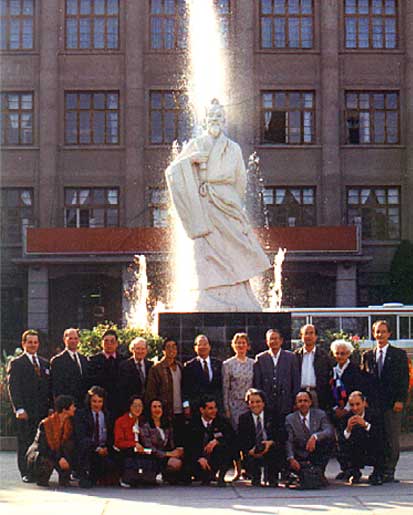
Rationale and Associated Case Study Presentation
The following presentation is the continuation of a paper James Middleton presented in China several years ago. Since that time the patient referred to in the case study has continued to improve in health, his case is fascinating to follow and record. The paper in its entirety is a preparation for a future conference, it is not intended in any way as a testimonial, advertisement or any of the like. Rather, the case study seeks to support the rationale presented in the first pages, being the main thrust of this presentation. The presentation is directed towards an audience (Australia and overseas) consisting of the broad range of Chinese Medical professionals. As the diversity of TCM treatment methods vary considerably, the purpose is to illustrate the benefits of the skilful combination of the five arts of Traditional Chinese Medicine, termed Wu Da Liao Fa and the specialised methods of Wu Yi, the later emanating from knowledge gained by the ancient martial arts traditions.
This said, the paper layout defines a classical approach, and therefore becomes informative for anyone wondering, what is Traditional Chinese Medicine? And is why it is on this web site. Due to the complexity of this case, any interested reader will be able to grasp the depth of understanding/view, integral within the logical layout of; TCM Symptoms Explanation, Diagnosis and Treatment Principle, Treatment Formula, and how each mechanism of disharmony is clearly explained and dealt with. They will also gather how the western medical explanation is fully integrated to compliment the overview and as an aid for further understanding.
Also revealed is the way treatment is in no way standardised. Calling upon a vast range of tools and tactics, treatment is adjusted according to presentation. This is in keeping with the TCM principle of deciding the imperative - whether to treat prevailing symptoms or the underlying causes. Of course, ultimately both must be dealt with.
The paper is a compilation of strategies employed over many years and is condensed, it is not intended as a precise treatment record. Eg. It is extremely rare to do as much in a single treatment as might appear upon reading.
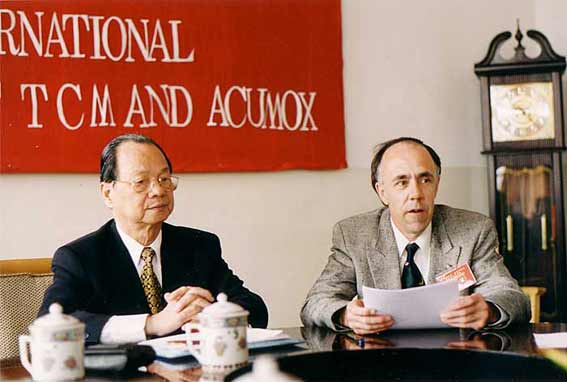
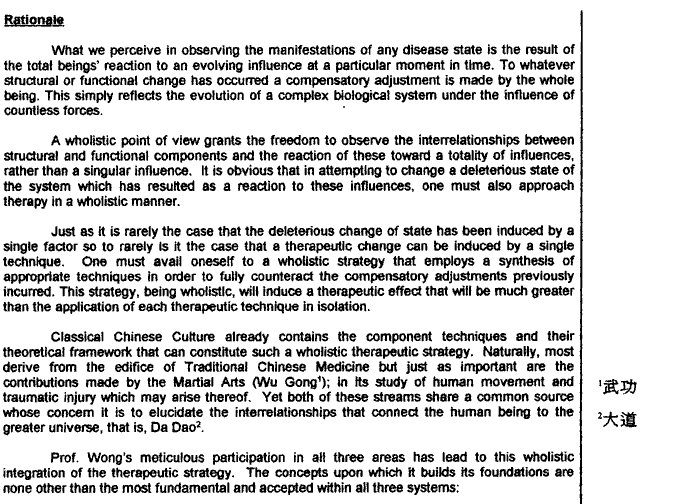
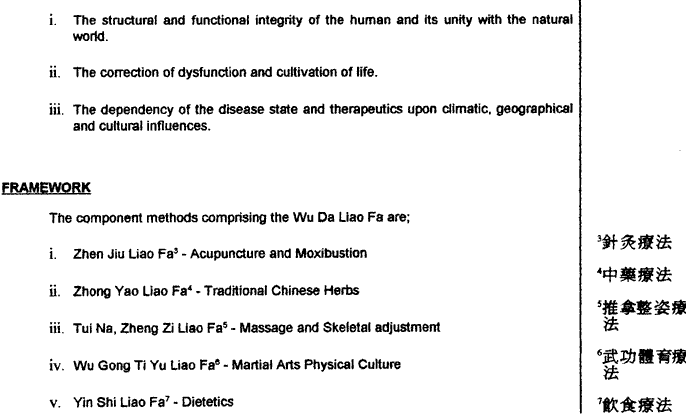
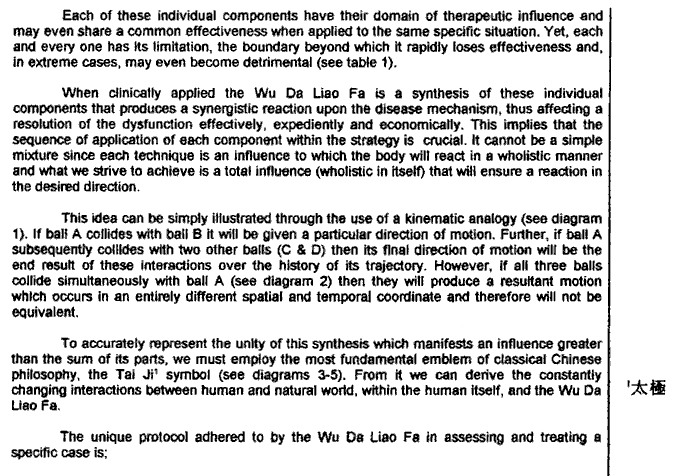
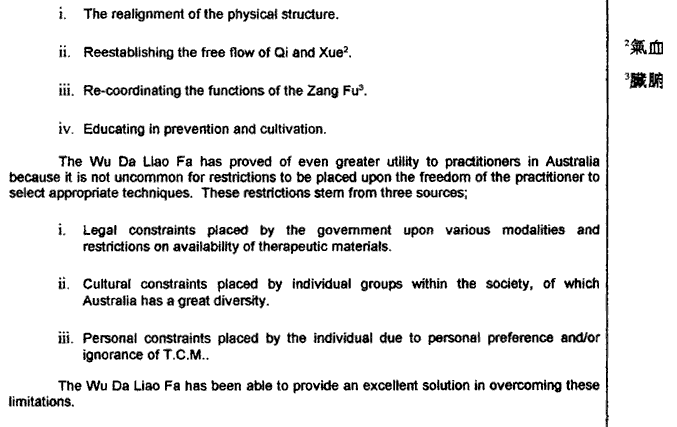
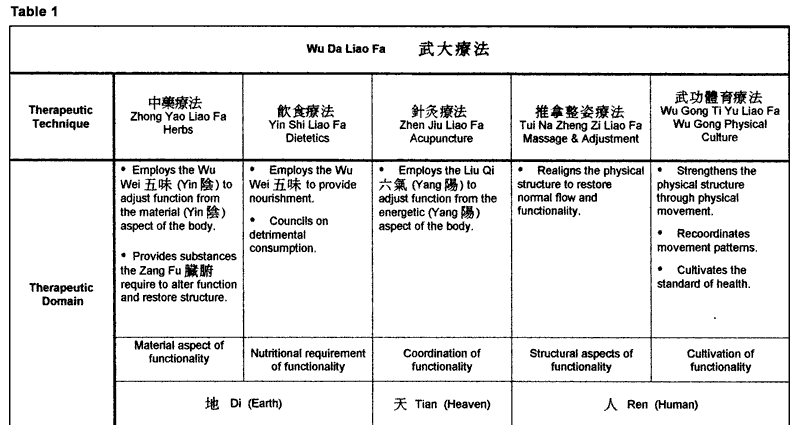
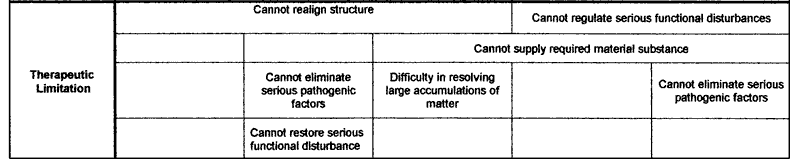
The Wu Da Liao Fa and the Treatment of Cystic Fibrosis
By James Middleton
Practitioner, Academy of Traditional Chinese Medicine Australia
Email; info@jamesmiddleton.net
- Details
Mr P.G. 27 years of age, when health allows is a professional chartered accountant, first consultation arranged 27/1/98 - History
Cystic Fibrosis diagnosed shortly after birth. At fourteen years of age diagnosed with diabetes –(Xiao Tiao) and Asthma. Periodically since that time Bronchiectasis, Pneumonia several times, Deep vein Thrombosis, Bowel obstruction. He has required hospitalisation two to four times a year for as long as he can remember.
Medication; Ventolin, Atrovent, Hypertonic Saline, Flixotide, Efexor, Digestive enzymes, Ciprofloxacin. - Zheng Hou - Clinical presentation
At this first consultation his complaint was chronic symptoms, a lot of green and yellow phlegm in the chest and a constant cough, feels tight and cold in the chest and is short of breath, bowels irregular fluctuating between one-week diarrhoea and one week constipation. Depression and is on prescribed anti depressants. He fears another attack of pneumonia. He expressed a fear for the future and that his prognosis was poor.
The pulse was generally wiry (Xian) and slippery (Hua). Proximal pulse on the right side Fei position was weak (Xu). The pulses of the left wrist were also deep (Chen)
The tongue demonstrates a normal shape, thin pale, pale on the heart and lung region, white coat and wet from the region of stomach and spleen all the way to the root. Blue veins show at the base underneath the tongue.
The eyes show blue sclera, sharp and fine red capillaries rise upward from the lower rim within the sclera and from the outside corners.
Appetite; good.
Sleep, difficult to fall asleep and difficult to rise in mornings.
Bowels, good.
Back, ache and pain lower back and lower abdomen
Upon exertion.Upon examination of postural integrity it was noted that;
- Pronounced lordosis of the spine.
- Compression of Thoracic vertebrae T3 - T6.
- Shoulders tilt forward with the right side further forward.
- The Thoracic spine reveals a lateral curve to the right side, main curvature occurring between T3. – T.9. Lumbar spine compensates leaning to the left side, between L.2 – L.4.
- Zheng Xi - Syndrome Analysis, Symptoms Explanation
The original condition of Cystic Fibrosis is thought to be an inherited disorder of the exocrine glands, causing these glands to produce abnormally thick secretions of mucus and an increase of organic and enzymatic constituents of saliva, with accompanying overactivity of the auto immune system. Thickened secretions cause obstruction of airways, which lead to distal infections, which become chronic unless the obstruction is relieved. The glands most affected are those in the pancreas, respiratory system and the sweat glands. The earliest manifestation is meconium ileus, an obstruction of the small bowel. Thrust of western treatment is to manage the condition. There is no known cure and treatment is directed at prevention of respiratory infection, which is most frequently the cause of death.
In T.C.M. terms we see involvement from contributing factors. It is plausible the further diagnosis of Diabetes, Bronchiectasis, deep vein thrombosis and bowel obstruction stem from the continuing effects of his bodies battle with Cystic Fibrosis. It may be assumed the original pathology is caused by phlegm turbidity and water rheum (Tan Zhou Shui Yin), reacting to each other within the fluid mechanisms associated with the lungs and the Spleen. In this situation when the fluids (Jin Ye) are not functioning properly creates pernicious accumulation of phlegm and water (Tan Yin Xie Qi).
We understand the body to be holistic in nature with each organ system being related and interdependent. Therefore the chronic presence of pathogenic Tan Yin Xie Qi since birth has caused affect to her natural growth apart from the obvious assault upon the systems directly related to the spleen and lungs and is probably responsible for breakdown in the other three organ systems namely;
- Kidney Spleen depletion - Diabetes,
- Lung Heart - fear, difficult sleep, poor peripheral circulation i.e. deep vein leg thrombosis,
- Liver - emotional fluctuations (depression).
Thus we find effects within all of the five Yin organs (Wu Zang). The presenting clinical pathology will manifest numerous symptoms whenever his normal Qi (Zheng Qi - overall vitality) is depleted/overwhelmed by any prevailing pernicious influence (Xie Qi) in time, seasons, or place. I.E. social, seasonal or professional stresses, diet - which explains the broad range of symptoms he may present with and now exhibits. This explains the generally Xian pulse.
The patients Hua pulse; sticky wet white tongue coat, copious amounts of expectorated phlegm, constant cough and no energy indicates the centre warmer (Liver Spleen and Stomach) initially presents as centre warmer replete (Zhong Jiao Shi) and changes to Centre Qi insufficiency (Zhong Qi Bu Zu) thus the transportation and transformation (Yun Hua) function of the spleen Qi does not operate normally. This explains why his body easily develops collected water (Ting Shui) progressing to generating damp (Shi), damp gathering thickens becoming phlegm damp (Tan Shi), causing phlegm congestion and Qi stagnation, this is the source of the impaired depurative down bearing of the lung, hence explaining the cough (Ke Sou).
The spleen transformation and transportation (Yun Hua) function is inhibited by phlegm damp (Tan Shi). This means the upward movement of spleen Qi to lung is also inhibited, the character of the rising Qi is pervaded by a pernicious phlegm (Tan Yin) resulting in cough (Ke Sou), Bronchial constriction and blocking the function of lung Qi dissemination. And as the situation is prolonged and chronic, leads to weakening lung function (Fei Xu), as indicated by the blue sclera of the eyes and the Xu pulse on the lung position. Lung deficiency (Fei Xu) will affect the ability of the kidney to grasp the lung Qi (Na Qi function), eventually also weakening the Kidneys. This explains the Asthma type breathing (Xiao) and fatigue symptoms. These symptoms occur in people harbouring a lot of internal phlegm (Nei Tan) in the body and in the lungs or Bronchi, altogether explaining why he is short of breath, has a feeling of oppression of the chest and needs to cough up a lot of phlegm in order to relieve these symptoms.
The struggle between the bodies overall vitality, normal Qi (Zheng Qi) and chronic phlegm rheum (Fu Tan Yin) sluggish in the lungs causes heat to build up in the lungs and further thickens the phlegm thus explaining the ever-present thick yellow phlegm (chronic infection of the lungs) which can move to become clumped and further baked (Huo Tan), thus explaining the green phlegm. During times when his overall vitality is low (Zheng Qi Xu), and accompanied by an attack from an external or internal pathogens (Wai or Nei Xie Qi i.e. Wai Gan Feng Han or Re), seasonal factors, or when he does not eat properly or suffers emotional stresses or overworks, all exacerbates the chronic condition leading to Pneumonia, Bronchiectasis, bowel obstruction etc. and at these times causes him grievous concern for his own life. It is noted his yearly hospital visits fall either at the time of winter changing to spring or autumn changing to winter.
Note, to protect him in Sept. Oct. do not allow heat to build up in the centre Warmer (Zhong Jiao) i.e. reduce (Xie), the stomach and Bladder meridians.
To protect him in May and June, avoid dryness/heat gathering within the upper warmer (Shang Jiao) reduce (Xie), Per. and large intestine meridians.
The transformation and transportation (Pi Yun Hua) function does not only describe the upward movement of Qi to the lungs, but also the corresponding down bearing of the stomach Qi. The downward movement of turbid Qi, including substances, (Zhou Qi) through the stomach and intestines will also be poor, thus contributing to the build up of disharmony within both. The continuing struggle with the bodies normal Qi (Zheng Qi) causes fluctuation between diarrhoea and constipation, he also says bowel regulation is worse whenever he is on the stronger medications.
The three-left side Chen - deep, pulses indicate that the Yang Qi is hindered from spreading outward. The integrity of skeletal structure is likely to be the cause. - Zhi Ze - Treatment Principle
Down bear counter flow and transform the damp (Jiang Yi Hua Shi)
Diffuse the lung, stop the cough and calm the dyspnea (Xuan Fei Zhi Ke Ping Chuan, dyspnea).
Fortify the spleen, transform the phlegm and calm the dyspnea (Jian Pi Hua Tan Ping Chuan, dyspnea).
Clear heat, diffuse the lung and stop the cough (Qing Re Xuan Fei Zhi Ke). - Zhi Liao - Treatment
The initial approach was to release/relieve any prevailing pressure of structural arrangement. This is to cause effect upon structure, i.e. all joints and the musculoskeletal system utilising the specialist methods of Wu Yi, in order to gauge its impact upon the signs and symptoms. To this end;
- The lateral leaning of the upper and lower spine was adjusted in the standing position by placing the patients right arm across her chest grasping the opposite shoulder, and the left arm grasping the right shoulder and providing firm traction. Subsequent to this manoeuvre she was standing straight as demonstrated by comparing the parallel line at the posterior border of the shoulder blades.
- The obvious Thoracic 3. and T.6.disharmony was addressed in the standing position.. Patient was asked to interlock his fingers behind his head and place her feet wide apart. Firm traction was applied causing extension to the compressed vertebrae and associated structures.
- In the supine position, patient was placed on his side and traction was applied causing a stretch to extend from the right shoulder to the right hip, to release the obvious compression of the Lumber Vertebrae and associated structures.
- Both legs and arms were rotated throughout their natural arcs and all joints checked for integrity.
Note. At no juncture was pressure applied upon any single point or his body placed in an unnatural position
The above three methods of traction attempts too relieve over all postural pressure and ease misalignment of natural arrangement, including lessor joints and associated structures i.e. musculature and tendons. The main feature at this point was the immediate relief of the cold, tight sensation pervading his chest.
The Chen level pulse on the left wrist disappeared and pulses on both sides strengthened. We can assume the correction of arrangement released the inhibition of Yang Qi spread throughout the major meridians, particularly; Zu Tai Yang (Bladder) and Du Mai (Governing Vessel), Zu Tai Yang Jing Jin, and Shao Yang Ming (Lg. Intestine) etc.
Treatment continued with;
- Massage of the whole back and neck to loosen the muscles and tendons, and invigorate the superficial circulation.
- Spooning (Gua Sha) Jia Ji to clear blood stasis (Xue Yu of the Zu Tai Yang Jing Jin).
- Two line spooning (Guasha) from Feishu - Bl. 13, to Pishu - Bl. 21, to clear blood stasis (Xue Yu from Zu Tai Yang) meridian.
- Cupping. Small cup slide up and down the spine, especially T.3. -T.6. Clear blood stasis – Xue Yu of the Du Mai meridian.
- Huo Guan - Cupping; Dazhui - Du.14, to drain wind and heat (Xie Feng Re). Feishu - Bl. 13. Pishu - Bl. 21. Shenshu - Bl. 24.
- Gua Sha – spooning; Very light as region is very tender, at Zhong Fu – Lu. 1, and Yun Men – Lu. 2. Free and disinhibit the lung Qi and to rectify the joints (Tong Li Fei Qi and Li Guan Jie).
- Ba Sha – pinching; At Shanzhong - Ren. 18, to loosen the chest and disinhibit the Qi (Kuan Xiong Li Qi)
- Huo Guan - Cupping; Daheng - Sp. 15. Tianshu - St. 25. Zhongwan - C.V. 13. Zhangmen - Liv. 13, to course the liver and rectify the Qi and disinhibit stagnant accumulation (Shu Gan Li Qi and Hua Ji Zhi).
- Acupuncture - Zhen; Qu Fang - Formula
- Bleed one drop from Dazhui - Du.16. to drain wind and heat (Xie Feng Re).
- Bleed first fingertips and the thumbs to reduce the heat toxin (infection) within lung and Lg. Intestine (Xie Re Du, Fei and Da Chang).
- Reduce (Xie) tactic both sides, Tiaokou - St. 38. Bu tactic Chize - Lu. 5. Lieque - Lu. 7.
- Needle in and out at Tiantu - Ren. 22.
After this procedure both left and right pulses were balanced. The Xian and Hua pulse character was much less apparent. The lung (Fei) pulse was still the weakest pulse.
The main feature at this point was the immediate release of pressure from his chest and complete relief from breathlessness, he reported being able to take a deep and full breath without coughing.
Perhaps even more important was an immediate easing of the acute symptoms of breathlessness, tight chest and coughing, which would normally lead him to hospitalisation and stronger medication. We can assume the immediate dynamic effect of the treatment is caused by the improved communication between the upper, middle and lower warmers (San Jiao). I.e. to clear Blood stasis and Qi stagnation (Xue Yu Qi Zhi), blocking at the diaphragm, plus the diffusion of the lung Qi (Xuan Fei) to down bear counter flow and transform the phlegm (Jiang Yi Hua Shi). - Herbal Formula
- Ren Shen Ge Jie San:
To boost the Qi and clear the lung (Yi Qi Qing Fei)
Alleviate cough and stabilise panting (Zhi Ke Ding Chuan) - Qing Qi Hua Tan Wan:
Clear heat and Transform phlegm (Qing Re Hua Tan)
Disinhibit the Qi and suppress cough (Li Qi Zhi Ke)
- Ren Shen Ge Jie San:
Conclusion
Since his first visit in Jan 1998 P.G. has only needed three days of hospitalisation on one occasion, this was due to an allergic reaction and not due to Cystic Fibrosis. Our strategy has been such that he comes in for treatment at the first sign of any problem. Our goal being to recover his symptoms before needing hospitalisation or stronger medications (which deplete him even though they help him), at these times he perhaps needs two or three sessions in one or two weeks. Treatment is always directed at the prevailing presentation. During times when he is feeling well and happy there is little urgency regarding regular treatments or herbal medications.
There is however an encouraged urgency regarding daily practice of a whole body basic exercise regime, (as prescribed by any academy of T.C.M. medical practitioner) including four different kinds of breathing exercises, also advice regarding lifestyle and dietary guidelines. Altogether, this approach increases his understanding about every part of the body, how to use and strengthen every part and how to coordinate every part, all aimed at fulfilling the principle of making the physical body and spirit stronger. His progress in health has been steady and sure. Lung function tests show an increase in volume and all signs are positive. His medication regime has dramatically reduced and he and his partner are looking forward to a bright future.
Over the years we have employed many variations of method and technique. Below is one grouping of the variations of Acupuncture points commonly employed.
Qu Fang - Main Formula
Use lung - Fei, Renmai, Bladder - Pangguang and Wei – stomach meridians.
Chize - Lu. 5. Lieque - Lu. 7. Tiantu - Ren. 22. Shanzhong – Ren. 17. Qihai - Ren 6. Feishu - Bl. 14. Shenshu - Bl. 23. Tiaokou - St. 38
The above is a commonly employed main formula, to be specific to the condition we will need to adjust according to Jia Jian – adjustments.
Fang Yi - Formula Explanation.
- Lung meridian; Chizi - Lu. 5. Lieque - Lu. 7. Shu Feng Jie Biao and Xuan Fei Zhi Ke - course the wind and resolve the exterior and diffuse the lung and stop cough.
- Ren Mai meridian; Tiantu - Ren. 22. Shanzhong - Ren. 17. Qihai - Ren 6. Hua Tan Ping Chuan - transform phlegm calm the panting.
- Chize - Lu. 5. Feishu - Bl. 13. Xuan Fei Hua Tan and Ping Chuan - diffuse the lung, transform phlegm and calm panting.
- Qihai - Ren 6. Shenshu - Bl. 24. Xuan Fei Na Qi Ping Chuan - diffuse the lung, aid Qi absorbs ion and calm the panting. The reason we need to aid Qi absorbs ion - Na Qi, is because of either a lung or kidney problem. The kidney acts to draw the lung Qi down to be grasped by the kidney Qi, to assist this function we employ Shenshu - Bl. 24.
- Fenglong - St. 40. Lead Qi downwards, transform phlegm and dampness - Jiang Qi Hua Tan and Shi, clear phlegm from the lung and alleviate cough and wheezing - Hua Tan Xuan Fei Zhi Ke.
The whole formula acts to Jian Pi Xuan Fei Hua Tan Zhi Ke and Ping Chuan - diffuse the lung, transform the phlegm, stop cough and calm panting.
Jia Jian - adjustments, add to the main formula.
If cause is wind cold - Feng Han.
Add, Hegu L.I.-4. Fengmen - Bl. 12.
To Xing Wen Jie Biao, - pungent and warm exterior resolving. These two points have a similar effect as with the herbal function. After adding the above points, the function of the whole formula is Xuan Fei Zhi Ke Ping Chuan – diffuse the lung, stop the cough and calm the panting.
If cause is wind heat - Feng Re.
Add, Dazhui - Du.14. Quchi - L.I. 11.
To Qing Re Xuan Fei Zhi Ke - clear heat diffuse the lung stop cough.
If cause is phlegm - Tan.
Add, Feishu - Bl. 13. Fenglong - St. 40.
To Jian Pi Hua Tan Ping Chuan - fortify the spleen, transform the phlegm and calm the panting.
If cause is liver fire - Gan Huo.
Add, Ganshu - Bl. 18. Taichong - Liv. 3.
Apply a reduce - Xie, tactic to reduce the fire, to Zhi Ke Ping Chuan - stop the cough and calm the panting.
Fenglong - St. 40. Is on the stomach Yang Ming Jing, this point will help clear the centre warmer Qi.
Also ease shortness of breath - Chuan Ni, copious phlegm and oppression in the chest.
Acknowledgments; Professor Wong Lun for the education he has disseminated.
The first pages describing the rationale for Wu Da Liao Fa were from a presentation in China in 1997 titled; The Wu Da Liao Fa - an illustrative exposition, written and presented by Rafael Vavala. He is a senior clinical Practitioner, senior martial arts instructor and a scribe for the Academy of T.C.M. Australia.